| Destination | Travel Time | Best For | Approx. Cost |
|---|---|---|---|
| 🇫🇷 Chamonix, France | 1h 15min | Mountains, hiking, cable cars | $30–80/day |
| 🇫🇷 Annecy, France | 45 min | Lake, old town, cycling | $20–50/day |
| 🇨🇭 Interlaken, Switzerland | 2h 15min | Adventure, Jungfraujoch | $50–150/day |
| 🇨🇭 Gruyères, Switzerland | 1h 10min | Cheese, castle, countryside | $25–60/day |
| 🇨🇭 Lausanne, Switzerland | 45 min | Culture, Olympic Museum | $20–50/day |
| 🇫🇷 Yvoire, France | 40 min | Medieval village, Lake Geneva | Free entry |
| 🇨🇭 Montreux, Switzerland | 1h | Château de Chillon, jazz heritage | $20–45/day |
Chamonix, France — The Crown Jewel of the Alps
If you do only one day trip from Geneva, make it this one.
Nestled at the foot of Mont Blanc — the highest peak in Western Europe at 4,808 meters — Chamonix is the kind of place that makes you stop mid-sentence and just stare. The town itself is charming, with wooden chalets, mountain gear shops, and some of the best fondue you'll find anywhere in the Alps.
What to Do in Chamonix
The cable car takes you from Chamonix (1,035m) all the way up to 3,842 meters, where you step onto a platform with a 360-degree view of Mont Blanc and the surrounding peaks. On a clear day, you can see into Italy and Switzerland. Book tickets in advance — they sell out fast in summer.
€65–75 return (adults), €55 childrenTake the historic red mountain railway (Montenvers train) up to the Mer de Glace, the largest glacier in France. You can walk into an ice cave carved directly into the glacier. Markers on the rock wall show how much the glacier has retreated over the decades — humbling and unforgettable.
€38 return (train + ice cave)Even if you skip the cable cars, Chamonix is worth the trip. Walk along the Arve river, grab coffee at a terrace cafe, and watch paragliders float down from the mountains above.
Free- Go on a weekday — weekends in summer are extremely crowded
- Check the weather forecast before you go — clouds completely ruin the Aiguille du Midi experience
- Wear layers even in summer — it gets very cold at altitude
- Book cable car tickets online 2–3 days in advance during peak season
Annecy, France — The Venice of the Alps
The most photogenic small city in France, less than an hour from Geneva.
Annecy is probably the most photogenic small city in France. The medieval old town sits along turquoise canals that flow into one of Europe's cleanest lakes. On a sunny morning, the reflections in the water, the flower-covered bridges, and the castle above the town create a scene that looks like it was designed by a movie set director.
What to Do in Annecy
Spend at least a couple of hours wandering the narrow lanes and arcaded streets. The Palais de l'Isle — a small island-prison sitting in the middle of the main canal — is the most photographed building in Annecy, and for good reason.
Free to exploreThe lake is the centrepiece of any visit. Rent pedal boats and kayaks, swim from the public beach, or walk the 3km promenade. The water is genuinely Caribbean-blue on a sunny day — one of the cleanest lakes in Europe.
Bike rental ~€15–20 per half dayThe castle above the old town houses a regional museum. The real reason to climb up is the view down over the rooftops and the lake — one of the best panoramas in the French Alps.
€6 adults- Arrive before 10am to beat the tourist crowds in the old town
- The market on Tuesday, Friday, and Sunday mornings is wonderful for local cheese and produce
- Annecy is very popular July–August — consider visiting in May, June, or September
- Walk 10 minutes from the old town for better food at local prices
Interlaken, Switzerland — The Adventure Capital
Base camp for the most dramatic mountain experiences in Europe.
Interlaken sits between two lakes — the Thunersee and the Brienzersee — with the Eiger, Mönch, and Jungfrau mountains forming the backdrop. It's the base camp for some of the most dramatic mountain experiences in Europe.
What to Do in Interlaken
The rack railway climbs through tunnels carved inside the Eiger, emerging at a high-altitude station (3,454m) with a sphinx observatory, ice palace, and views across the Aletsch Glacier — the largest glacier in the Alps.
CHF 145–229 return from InterlakenThe funicular up to Harder Kulm (1,322m) gives a stunning panoramic view over both lakes and the mountains. The "2 Lakes Bridge" viewpoint platform is perfect for photos — at a fraction of the Jungfraujoch price.
CHF 34 returnInterlaken is one of the best paragliding locations in Europe. Tandem flights take off from Beatenberg and land near the town center. The 20–30 minute flight over lakes and mountains is unforgettable.
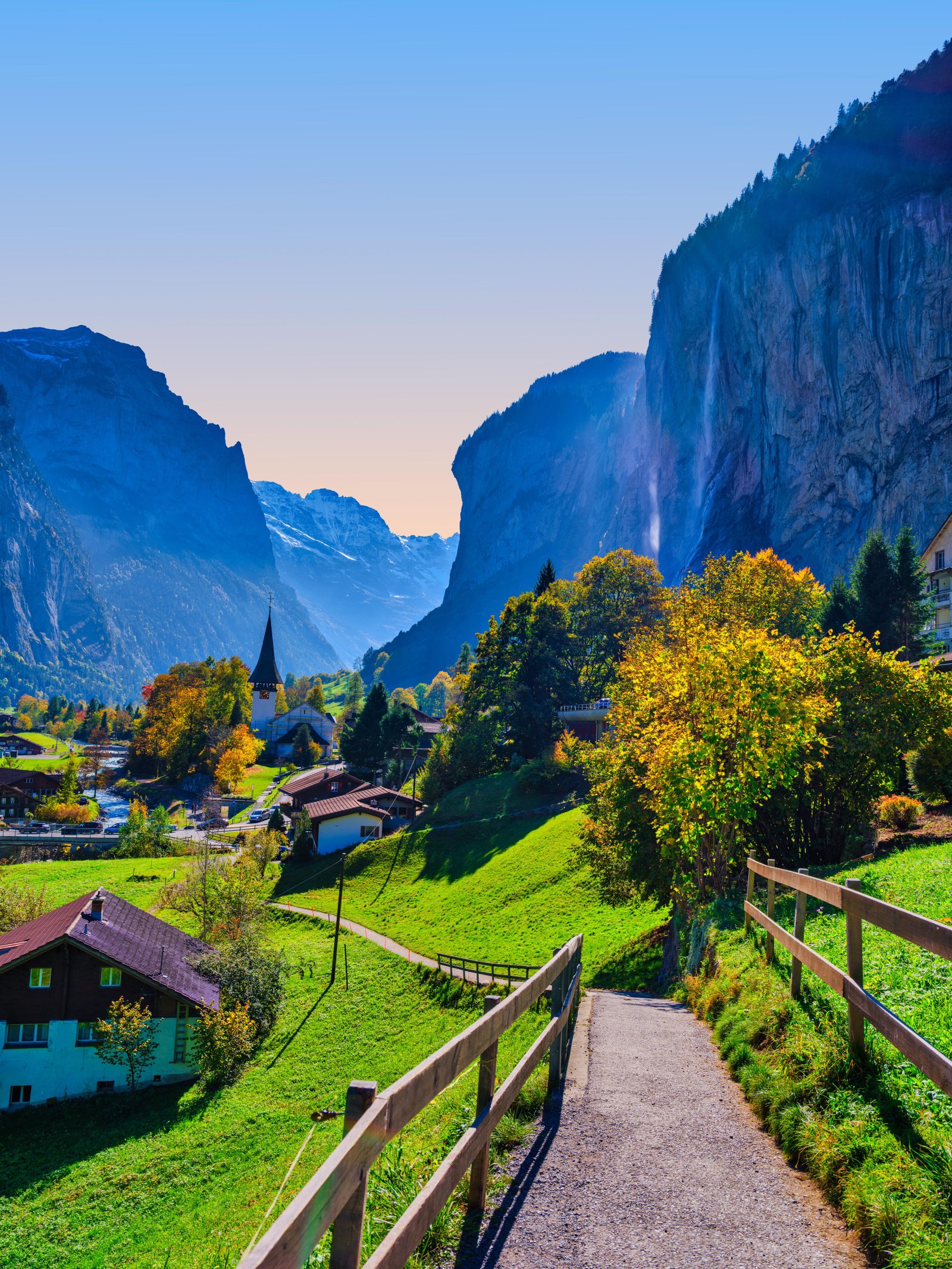
CHF 160–180 for a tandem flightA short drive from Interlaken, this valley has valley walls that rise 300 meters straight up on both sides, with 72 waterfalls cascading down. The Staubbach Falls fall freely for almost 300 meters.
Free to visit the valley- Jungfraujoch is worth every franc — but only on a clear day, check the webcam before booking
- Harder Kulm + Lauterbrunnen gives 80% of the experience for 20% of the cost
- Interlaken is very crowded July–August — aim for midweek visits
- Bring warm clothes even in summer — mountain weather changes fast
Gruyères, Switzerland — Cheese, Castles & Countryside
A medieval village that seems almost too perfect to be real.
Gruyères is one of those Swiss villages that seems almost too perfect to be real — a single main cobblestone street, a medieval castle at the top of a hill, and at the bottom of the hill, the place where Gruyère cheese has been made for centuries. An ideal day trip if you want something slower and more scenic.
What to Do in Gruyères
The 13th-century castle is one of the best-preserved medieval castles in Switzerland. Inside you'll find period rooms, tapestries, and paintings. The views from the castle garden over the rolling green hills are exceptional.
CHF 12 adults, CHF 6 childrenThis working cheese dairy lets you watch Gruyère being made (most mornings 9am–11am). Taste different ages of the cheese — mild (5 months), reserve (10 months), and cave-aged. The difference in taste is remarkable.
CHF 7 adultsGruyères is home to a dedicated museum to HR Giger, the Swiss artist who designed the creatures in the Alien film franchise. Inside a medieval building on the main street — the contrast with the village around it is surreal and wonderful.
CHF 12.50 adults- Arrive before 11am to watch the cheese-making process in action
- The village gets very busy on weekends — aim for a weekday
- Don't leave without trying the meringue and double cream — a local specialty
- Combine with a stop at Lac de la Gruyère for a full day out
Lausanne, Switzerland — Culture on the Lake
The world capital of the Olympic movement, 45 minutes from Geneva.
Lausanne is the second city of French-speaking Switzerland, sitting on terraced hills above Lake Geneva with a view across to the French Alps. It's quieter and less expensive than Geneva, with a strong student energy, world-class museums, and a beautiful lakeside promenade.
What to Do in Lausanne
The International Olympic Committee has been headquartered here since 1915. The museum is genuinely excellent, with interactive exhibits, historical artifacts, and multimedia displays covering the entire history of the Games. Even if you're not a sports fan, it's worth two hours.
CHF 20 adults, CHF 12 youthThe finest Gothic cathedral in Switzerland. Climb the tower for a view over the city and lake. The city still maintains a centuries-old tradition of the "nightwatch" — a guard who calls out the hours from the tower every night between 10pm and 2am.
Free entryWalk along the lakeside at Ouchy, rent a paddleboat, or sit and watch the lake. On clear days the view across to the French Alps (Évian is directly opposite) is exceptional. The gardens are beautifully maintained year-round.
Free- Lausanne is built on a steep hill — comfortable shoes are essential
- Use the M2 metro to connect Ouchy (lakeside) to the city center quickly
- Late afternoon light on the lake is stunning — plan to be at Ouchy around 5–6pm
- Lausanne has excellent restaurants at better prices than Geneva
Yvoire, France — A Medieval Village on Lake Geneva
The best-kept secret on this list. Only 40 minutes from Geneva.
Yvoire is a tiny medieval village on the French side of Lake Geneva, classified as one of "Les Plus Beaux Villages de France". The village dates from the 14th century and its fortified walls, towers, and flower-covered stone houses have barely changed. You walk through an ancient gate, down cobbled lanes, and emerge at the water's edge with views across the lake to the Swiss mountains.
What to Do in Yvoire
The village is small — you can see everything in 1–2 hours. Walk through the two medieval gates, along the ramparts, past the 14th-century castle (exterior only), and through the winding lanes. Every corner is photogenic.
FreeThe Garden of Five Senses is Yvoire's main tourist attraction — a medieval-inspired garden designed around the five senses. Beautiful if you enjoy carefully designed botanical spaces.
€11 adultsYou can take a ferry from Yvoire across to Nyon in Switzerland — a lovely way to cross the lake and return by a different route. In summer, small beaches near the village are perfect for swimming.
Ferry from ~€10- Come in the morning or late afternoon — midday in summer is very crowded and parking fills up
- Combine with Excenevex beach (5 min away) — one of the best sandy lake beaches near Geneva
- The ferry combination (drive one way, boat the other) makes for a lovely full day
- Village entry is completely free — main costs are parking and the garden
Montreux, Switzerland — Château, Jazz & Lakeside Glamour
Palm trees, mountain backdrops, and a medieval castle at the water's edge.
Montreux sits at the eastern end of Lake Geneva where the mountains close in on both sides. The palm trees along the promenade, the mild microclimate, and the dramatic mountain backdrop give it a slightly Mediterranean feel that you don't expect in Switzerland.
What to Do in Montreux
One of the most visited historic sites in Switzerland — and it fully deserves its reputation. The castle sits on a small rocky island right at the water's edge. Inside, you walk through 14 centuries of history: medieval dungeons, ornate halls, towers with lake views.
CHF 14.50 adults, CHF 7 childrenThe 10km promenade from Montreux toward Château de Chillon is one of the most beautiful walks in Switzerland. Palm trees, flower gardens, and fountains line the path. You'll pass the famous Freddie Mercury statue — Queen's frontman loved Montreux and recorded music here for years.
FreeTake the rack railway up to 2,042 meters for a panoramic view over the entire Lake Geneva region. On a clear day you can see from Mont Blanc to the Bernese Alps.
CHF 67 return from Montreux- Visit Château de Chillon first thing in the morning before tour groups arrive
- Walk from Montreux to Chillon and back (3km each way) — the lakeside path is far better than the bus
- In summer, lake boats connect Montreux to other Lake Geneva towns — consider the boat one way
- If you visit in July, the Montreux Jazz Festival completely transforms the town
Practical Information
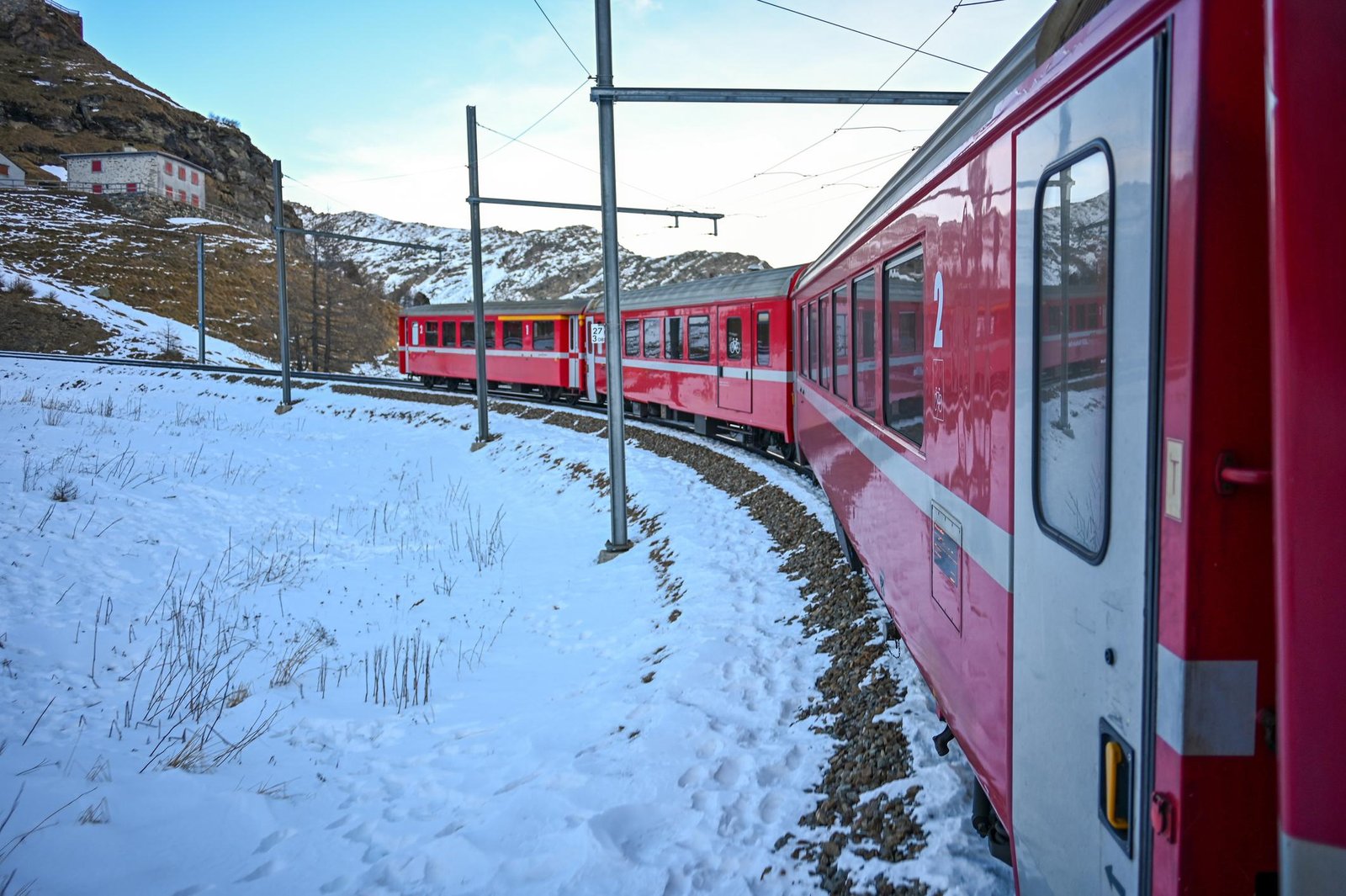
A car gives the most flexibility for French destinations (Chamonix, Annecy, Yvoire). For Swiss destinations, the train is often just as fast — Swiss trains are punctual, clean, and scenic.
Covers unlimited travel on all Swiss trains, boats, and most mountain railways. If you're planning multiple Swiss day trips in a week, calculate whether a pass saves you money vs. individual tickets.
Switzerland is not part of the EU and healthcare costs are extremely high. Mountain rescue alone can cost $10,000+ without coverage. Always get a policy that includes mountain rescue.
Swiss destinations use CHF, French destinations use EUR. Cards are widely accepted, but carry some cash for smaller cafes, parking machines, and village markets.
Best Time of Year
Final Thoughts
Geneva's location is genuinely extraordinary. Within two hours in any direction, you can be standing on a 3,800-meter glacier, walking through a 14th-century village, cycling along a turquoise lake, or eating the cheese that invented its own name.
We've done all seven of these day trips — some of them many times over — and each one is worth your time. If we had to pick just one for a first-time visitor: Chamonix in summer for the Aiguille du Midi, or Annecy on a sunny morning in June. You won't regret either.